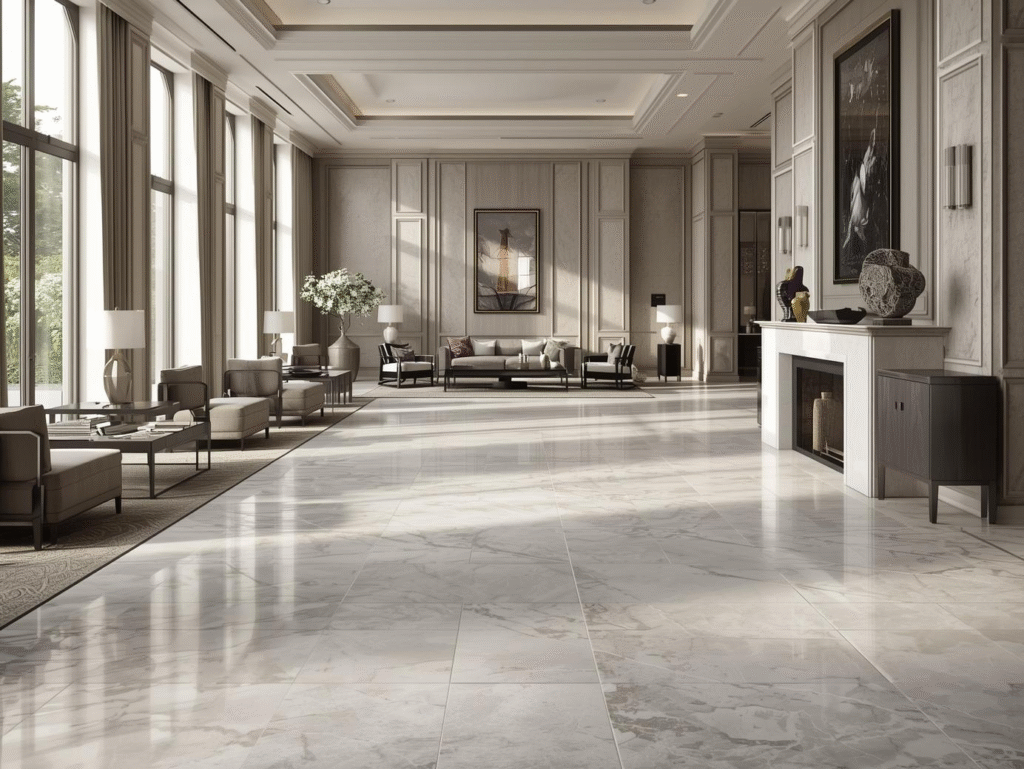
Premium porcelain tiles reflect light and appear to change color because of how their surface finish and material structure interact with light. Here’s a breakdown of why that happens:
1. High Gloss and Polished Surface
- Premium porcelain tiles—especially polished ones—have a mirror-like surface. When light hits the surface, it reflects directly rather than scattering.
- Under bright sunlight or LED lights, this reflection makes the surface appear lighter or shinier.
- Under dim or warm lighting, the same tile can look darker or warmer in tone.
2. Micro-Crystal and Glaze Layers
- Many premium tiles are manufactured with multiple glaze or nano-coating layers. These layers refract and reflect light differently depending on the angle of viewing.
- This creates a “color-shifting” effect—you may notice subtle changes in hue or tone (for example, grey tiles appearing slightly beige or blue).
- This is similar to how car paint or metallic finishes shift colors under different lighting conditions.
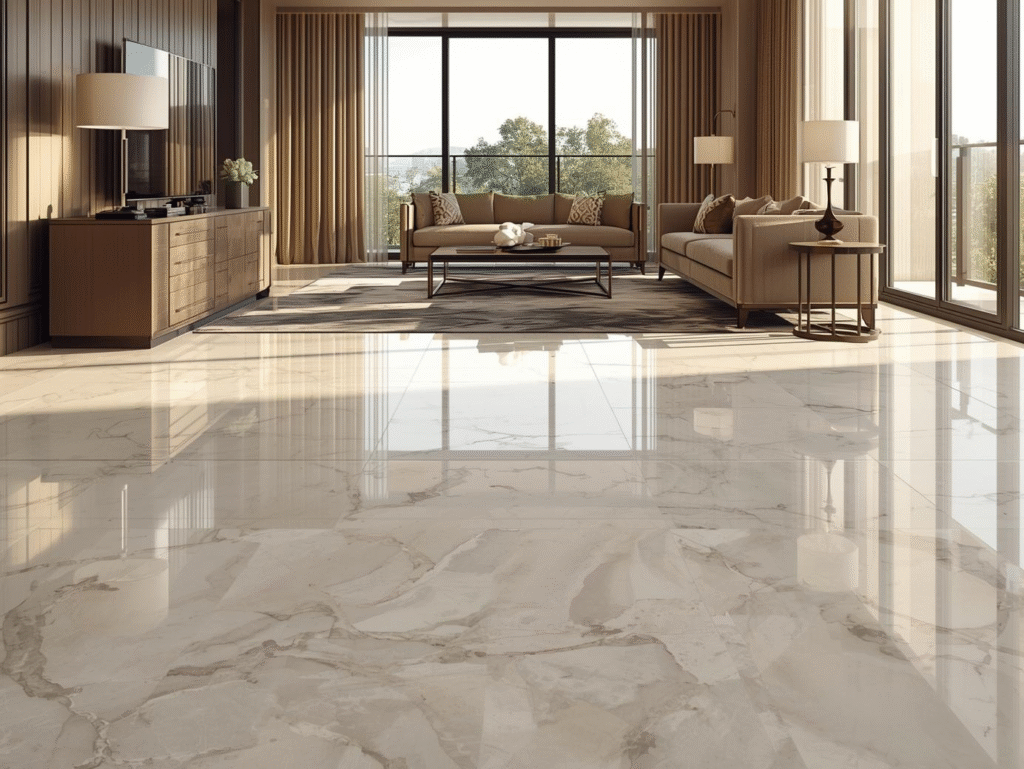
3. Ambient and Directional Lighting
- Light color and intensity in the room affect how the tile looks:
- Warm white light (2700–3000K) gives tiles a golden or creamy appearance.
- Cool white light (5000–6500K) enhances bluish or grey tones.
- Natural daylight varies throughout the day—so tiles can look different in morning, afternoon, or evening light.
4. Surface Texture and Angle
- Even “polished” porcelain has microscopic texture. Depending on where you stand, light reflects differently across the surface, giving the illusion of color or shade change.
- Tiles with rectified edges or high polish show this effect more dramatically.
5. Surrounding Colors
Walls, furniture, curtains, and floor colors can all influence the perceived color of tiles through reflected light. A neutral grey tile may appear slightly green next to wooden furniture or bluish near white walls.